
How to Measure your Seat Height?
This Seat Height Measurement Guide explains how to accurately determine your ideal seat height – also known as popliteal height - so you can select an ergonomic chair that properly fits your height. Proper chair seat height ensures an ergonomic sitting posture while reducing strain on the lower back, hips, knees, and feet during prolonged sitting.
When purchasing an ergonomic chair, you may be asked to select a cylinder size during the configuration process. The gas cylinder determines the chair's sitting height adjustment range. Located inside the chair column that connects the seat and backrest to the base, a cylinder allows the chair to move up and down. Seat height is measured from the floor to the midpoint of the front edge of the seat cushion while the chair is unoccupied.
Common gas cylinder sizes include 4", 5", and 6". For example, a 4” cylinder will allow the chair’s seat to move a total distance of 4”. A 5" cylinder is standard or default for many chairs providing a seat height range of 16"–21" or 17"–22".
When a chair is adjusted to the ideal seat height, your feet will rest flat and secure on the floor, your knees will remain comfortably bent at around 90 degrees, and your thighs are fully supported without excessive pressure. However, if a chair is too high, it can put pressure beneath the thighs, cause the feet to dangle and lead to numbness. A chair that is too low may increase stress on the knees and encourage poor posture. (If your desk requires you to raise the chair higher than your ideal seat height, consider using an ergonomic footrest to keep your feet fully supported while maintaining proper keyboard and desk height.)
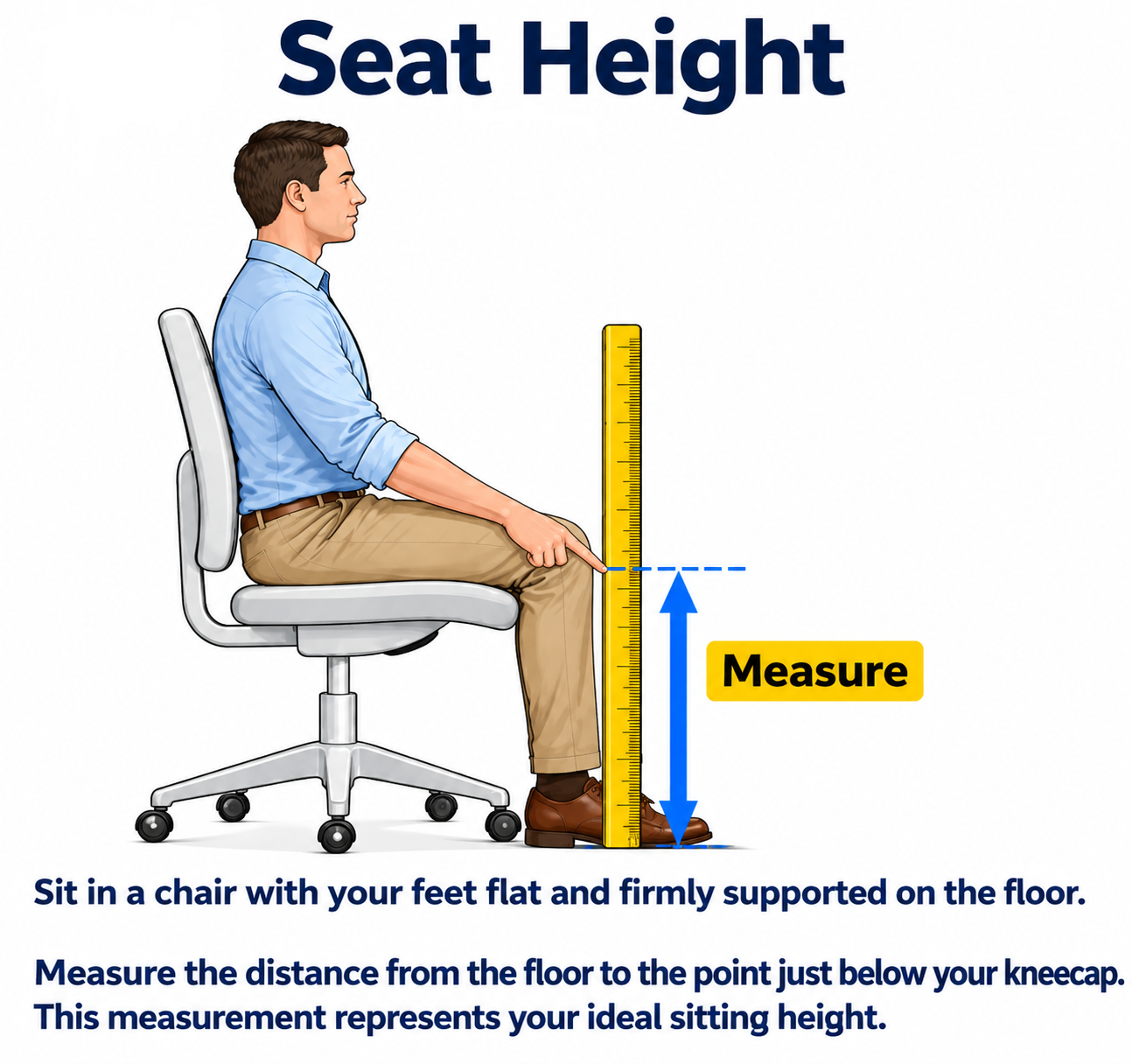
How to Measure Your Seat Height
• Sit in a chair with your feet flat and firmly supported on
the floor.
• Sit all the way behind in the chair with your back fully supported by the
backrest.
• Using a measuring tape, measure the distance from the floor to the point just
below your kneecap.
• This measurement represents your ideal sitting height.
Once you have determined your popliteal height, compare it with the adjustment range of your preferred chair.
Ideally, your popliteal measurement should fall near the middle of the chair's seat height adjustment range rather than at either extreme. This provides flexibility to accommodate variations in posture, footwear, and individual body proportions.