
Seat Width and Depth Measurement
Measuring your seat width and seat depth accurately is an important step in choosing an ergonomic chair that fits your body properly. This guide explains how to take these measurements correctly so you can select a chair that fits your body dimensions and promotes long-term comfort. Proper seat sizing also helps distribute body weight evenly across the seat, improves circulation, supports healthy posture, and reduces pressure points during extended periods of sitting.
If a chair seat is too narrow, it can create pressure on the hips and thighs making it difficult to sit comfortably for long periods. If a seat is too wide, users may need to position their arms and elbows farther away from their body to rest on the armrests. Over time, this can lead to discomfort and pain in the shoulders and arms. Similarly, a seat that is too deep can put pressure behind the knees and restrict circulation while a seat that is too shallow may not provide adequate thigh support.
For accurate results, sit in your normal working posture while taking measurements, or ask another person to assist you.
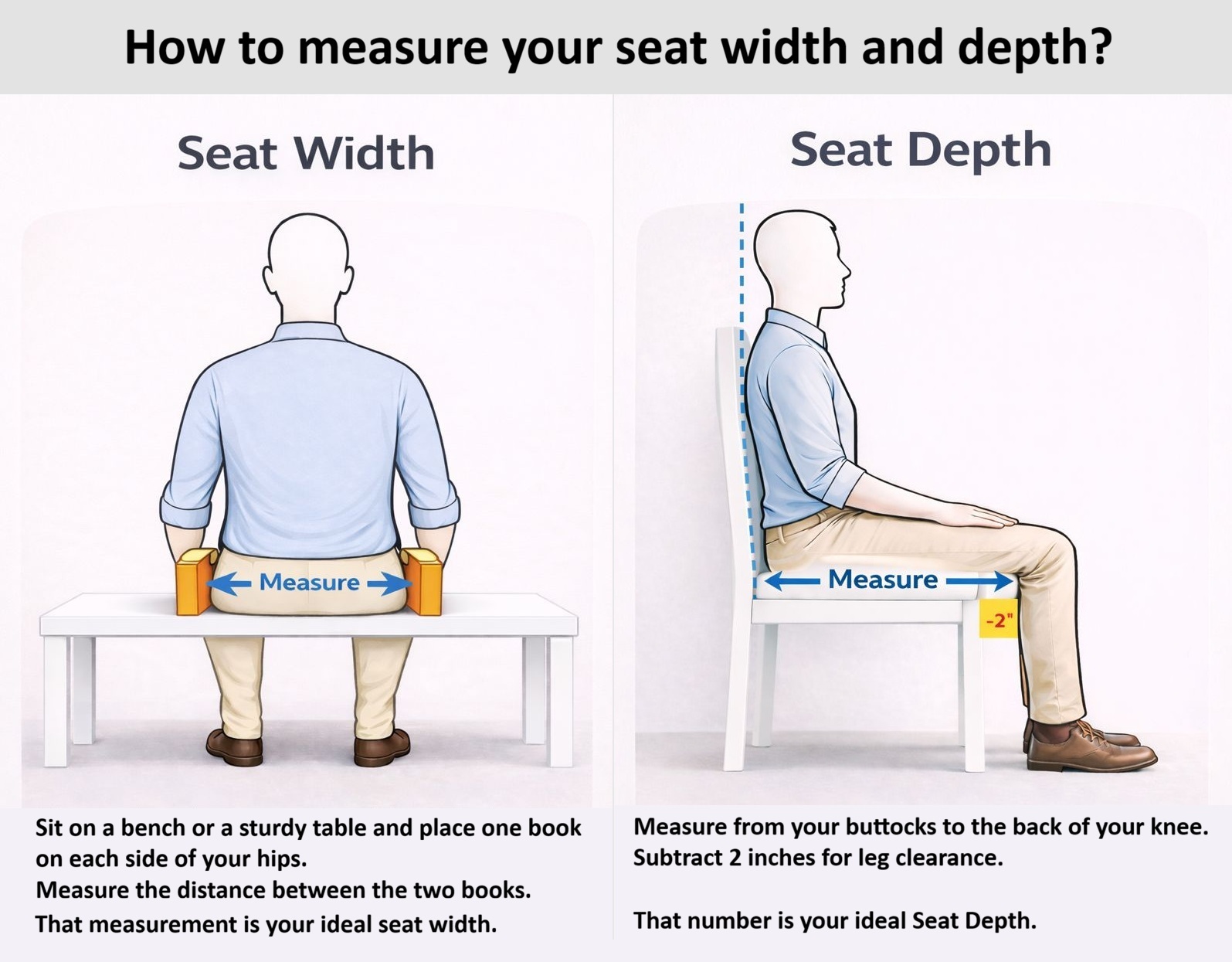
How to Measure Seat Width
a) Sit on a firm,
flat surface with your feet flat on the floor.
b) Place one book vertically against each side of your hips.
c) Measure the distance between the two books.
d) This measurement represents your seat width.
How to Measure Seat Depth
a) Sit upright on a flat surface with back straight, feet flat on the floor and your knees bent at 90 degrees.
b) Measure
the distance from your buttocks to the back of your knee.
c) Subtract approximately 2 inches to allow for proper leg clearance, which is
the amount of open space available between the edge of the seat cushion and the
legs. Insufficient leg clearance can cause discomfort and restrict blood flow
behind the knees.
d) The resulting measurement is your ideal seat depth.
We use seat width and seat depth measurements to match your body dimensions with the specifications of our ergonomic chairs. Whether you are petite, average height, or tall, selecting the correct seat size improves comfort, support, and long-term sitting ergonomics.
How to use seat depth and seat width measurements
1. Seat Width
(For Comfort)
The Rule: Choose a chair with a seat cushion that is slightly wider
than your measurement.
Why: This gives you plenty of room to move comfortably without feeling
cramped.
2. Seat Depth (For Back Support)
The Rule: Look for a seat depth slightly longer than your
measurement.
The Test: When sitting all the way back against the backrest, you should
have a 2 to 3-inch gap (about 2 or 3 fingers) between the front of the
seat and the back of your knees.